Skip to content

Liverpool’s historic architecture: tours, sell-offs and exhibitions

Well, now that Historic Liverpool is up, running and generally settling into its new clothes, we can get back to talking about the rest of the news! RIBA are planning tours of Liverpool, the City Council is planning to sell its historic buildings, and SevenStreets show you the best of RIBA’s upcoming Northwest Architecture Festival. Read more

Another new Historic Liverpool

I’ve been very excited about this for a little while, and though it may be just me who thinks this is cool, I’m pleased to announce the launch of the all-new, polished-and-improved, shiny-swishy Historic Liverpool!

And that’s why I’ve been neglecting this blog for several weeks now. Read more

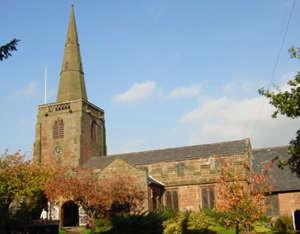
Medieval church of All Saint’s, Childwall, to get new extension

Proposals for new developments at Childwall’s All Saint’s church look set to get planning permission. The plans are labelled ‘controversial’ by the Liverpool Echo.

All Saint’s is Liverpool’s oldest surviving church – parts date to the Medieval period – although the only parts of the building which will be knocked through are more modern sections of wall. In addition to this around 180 bodies may need to be exhumed and moved to the  Bloodstained Acre, land to the north never before built upon. Read more

Merseyside Archaeology Service closes

The Merseyside Archaeological Service (MAS) has been shut down, and now there is no longer access to the Merseyside Historic Environment Record. According to the notice on the Liverpool Museums website this was due to the removal of funding by all partners.

The MAS was set up in 1991, and received funding from the five Merseyside local authorities (Liverpool, Wirral, Sefton, Knowsley and St Helens). Historic Environment Records (HERs) grew out of the Sites and Monuments Records which began with Oxfordshire in the 1960s to cover the whole country by the 1980s. The change in name came in the last decade to reflect the increase in coverage and scope. Read more

Liverpool Heroes 3: Vikings in Liverpool

OK, so perhaps the Norse Vikings are aren’t the first people to come to mind when we think of ‘Liverpool Heroes’. They’re distant in time, left little visible trace in our city, and went about changing society through the delicate application of pointy-horned helmets.

But of course none of that is strictly true. There are traces of the Norse presence on our doorstep, and may have paved the way for Liverpool itself to be settled half a millennium after they first arrived.

Place names – Norse Language in Liverpool

The most obvious clues to the way in which Norse settlers changed the landscape are the place names seen across the county. In fact, the distribution is the very thing which gives greatest evidence to the local historian.

In the west of the region are the village and town names of Scandinavian origin: Toxteth, West Derby, Kirkby (and West Kirkby). In the north and east are names which signal the presence of Anglo-Saxons: Walton, Bootle, Childwall. These names contain elements of the language the inhabitants spoke (e.g. botl = Old English, “dwelling place”; kirk = Norse, “church”), and therefore must date from the time the Norse arrived from Scandinavia via Dublin, and began moving into Anglo-Saxon territory.

Norse Politics and Merseyside Geography

In addition to the language, place names reveal elements of the geographical or political situation of the time.

Raby on the Wirral, and Roby near Huyton, get their name from the Norse for ‘boundary settlement’. Where these villages stand was once the edge of a land division, probably between the Norse and the Anglo-Saxons (one of whose centres was Chester, to the south east of Viking Wirral and indeed Raby).

Other place names show that Norse settlements were on sand dunes or mosses (‘Meols’ is from the Norse ‘melr’, meaning “sandhill”. Rather than the ruthless invaders we imagine them to be, for a time they were confined to the less fertile ground on the edges of the land.

Thingwall – both on the Wirral and the Hall of that name south of Knotty Ash – signal the site of ‘Things‘, Norse parliaments. Not only does this show how Vikings settled and set up rather civilised government structures, it also shows how a common name on modern Merseyside owes its origins to something brought in by the Scandinavian incomers.

West Derby (Norse: “park with deer”) became an important administrative centre at this time, being the centre of the West Derby Hundred, which stretched from the Mersey to the Ribble at Preston. The medieval ‘wapentake’ court was held here, a castle was built shortly after the Norman Conquest, and West Derby’s importance to government lasted until the 14th or 15th centuries when Liverpool itself rose to prominence.

Vikings – Liverpool Heroes?

By the time their culture disappeared beneath the incoming wave of William the Conqueror’s army, the Vikings had made an imprint in the geography and history of Liverpool and Merseyside.

Place names which survive right up to today tell us where their churches were, their parliament and their borders, and they also tell us the type of landscape they occupied. But was the effect of these invaders on the Liverpool landscape ‘radical’?

They arrived, settled and established a court at West Derby, and for around 500 years this inland location was the centre of power in north west England. Later, Edward the Confessor saw fit to site a hunting lodge here, and later still William the Conqueror deemed it a worthy reward to Roger de Poitou, one of his most powerful allies in the invasion.

If it wasn’t for the society which grew up here around the Thing from the 8th Century, West Derby may have remained a tiny woodland village, and perhaps the attention of King John would not have so naturally fell on the Mersey for a place to launch his Irish campaigns.

Who knows what Liverpool would have looked like had the Vikings not settled on and spread from the Wirral all those centuries ago?

Further reading on the Vikings

Cover of the book Viking Mersey, by Stephen Harding

A great overview of the Vikings on Merseyside is Viking Mersey by Stephen Harding, and details of the West Derby Hundred can be found in History of West Derby by J.G. Cooper and A.D. Power.

Liverpool Industrial Heritage at Risk

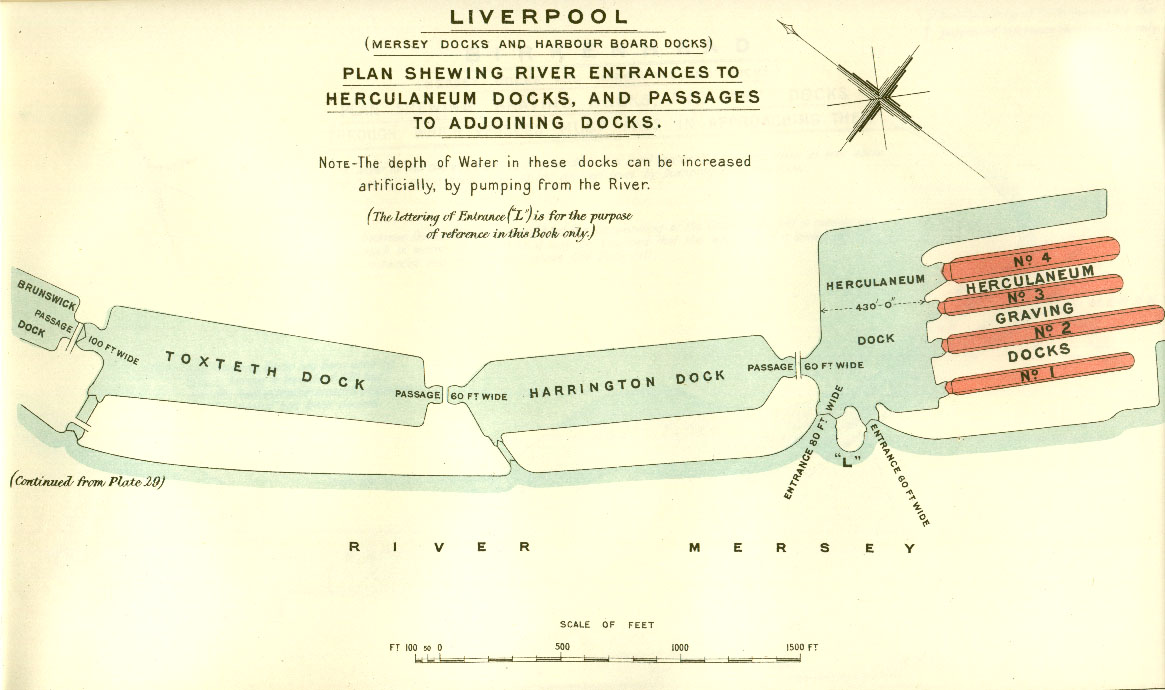
Plan of the Herculaneum Docks, South Liverpool, from the World War I Document Archive

The Herculaneum Docks, South Liverpool - industrial heritage no longer with us (from the World War I Document Archive)

Industrial Heritage at Risk is this year’s Heritage at Risk theme, launched today by English Heritage in conjunction with the Council for British Archaeology (CBA) and the Association for Industrial Archaeology (AIA). The annual Heritage at Risk survey launch is in October.

Liverpool is not always closely associated with ‘industry’ in the same sense as the wool industry of Manchester and Lancashire, or the coal industry of Yorkshire. Liverpool’s World Heritage Site is the ‘Maritime Mercantile City‘, and even though the Exchange buildings and the Customs house are closely linked with industry on a wider scale, it’s more accurate to class it as ‘commerce’.

However, commerce is difficult to see embodied in archaeology or buildings, and the buildings English Heritage are talking about are as often as not a product of industry, made possible by the Industrial Revolution, rather than playing a part in industrial production itself.

In fact, much of Liverpool’s built heritage fits this bill rather well.

[There is a lot more detail about the development of Liverpool’s small-scale industries (potteries, mills and the like) in the Liverpool and Toxteth sections of the Historic Liverpool website (or search for ‘mill‘ or ‘pottery‘ to see a whole lot more).]

Liverpool’s industrial heritage at risk

All the sites at risk in Merseyside can be seen via a search on English Heritage’s Heritage at Risk microsite: . You can then break the list down into classes of ‘at risk’ heritage, including buildings, conservation areas, scheduled monuments and registered parks and gardens.

The industrial class of heritage is small but easy to spot: there’s the infamous case of the Stanley Dock tobacco warehouse as well as the Stanley Dock conservation area itself.

But English Heritage wants a wider debate on this, rather than just promoting the current list of at-risk buildings. So, start here if you want (in the comments!) or visit the Industrial Heritage at Risk Flickr group.

Alarmingly there’s a photo of Albert Dock in the photo pool, but as I say this discussion is about a wider appreciation of industrial heritage. Remember, the Albert Dock was once indeed at risk of demolition, and is one of the best reminders of how historic buildings can be brought back into use successfully as modern developments.

The aim of the Flickr group is to bring people together to discuss which parts of their industrial heritage are most-loved, and those which perhaps should be added to the list come October. You can, as with any Flickr group, add photos and comments of your own.

So this is a call from one Liverpool historian to others: get your photos on there and promote the best of Liverpool industrial archaeology! Here’s a few suggestions to get you thinking:

  • Albert dock (you can never have too much Albert Dock)
  • Stanley Dock and the tobacco warehouse
  • Liverpool Maritime Mercantil City World Heritage Site (plenty of room for discussion)
  • Lime Street Station and the railway and tunnels to Edge Hill and beyond
  • Former Bryant and May Match Factory
  • The Three Graces
  • Leeds-Liverpool Canal

Liverpool Heroes 2: Kitty Wilkinson

Kitty Wilkinson’s story is classic Victorian Liverpool: born in Londonderry in 1786, Wilkinson moved to Liverpool with her parents when she was just 8 years old. Tragically her father and sister were drowned at the end of the crossing when their ferry hit the Hoyle Bank.

(This article was originally inspired by International Womens’ Day, which takes places on March 8th each year).

Despite being faced with the terrible hardships of the time, she was known for opening her house to anyone who needed help. One of the services this entrepreneurial woman took on was to allow people to use her house and yard to wash their clothes for a penny a time. During a cholera outbreak in 1832 she offered her scullery boiler to all who wished to wash their clothes and linen.

Photograph of the interior of Frederick Street wash house
Interior of Frederick Street wash house, built in 1842

This proved so popular that her cellar gradually evolved into a wash house. None of those who worked here became infected by cholera, so effective were her disinfection efforts (e.g. the use of bleach to help clean clothes), and Kitty’s efforts led directly to the opening of the first public wash house. This was in Upper Frederick Street, and opened in 1842.

Given support by the District Provident Society and William Rathbone, Wilkinson was made superintendent of bath, and through the newspapers was crowned ‘Saint of the Slums’.

In 2010 it was announced that a statue was to be erected in her honour, and would be placed in St Georges Hall. As councillor Flo Clucas, who campaigned for the statue, said: “Through rising from abject poverty to achieve lasting reforms in public health Kitty Wilkinson is a real inspiration for every woman in this city.”

So how did Kitty Wilkinson shape the landscape? She pioneered the public wash house movement, and the last wash house closed only around a decade ago. The Upper Frederick Street building was a monument to her efforts, and in a sense the rest of the wash houses were also. In less concrete terms she also affected the human landscape of Liverpool. For the first time there was a place to go to clean your clothes properly, and the effects on stemming the spread of disease through the city are a legacy of Kitty Wilkinson’s generosity and hard work. This woman was a testament to fact that even those born into the poorest levels of society can make a massive difference to the built and experienced landscape.

Further reading on Kitty Wilkinson

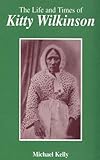
Cover of the book The Life and Times of Kitty Wilkinson, by Michael Kelly
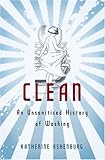
Cover of the book Clean: An Unsanitised History of Washing, by Katherine Ashenburg

For a detailed look at the achievements of Kitty Wilkinson, see Michael Kelly’s 2007 book The Life and Times of Kitty Wilkinson.

For an overview of the history of personal hygiene read Clean: An Unsanitised History of Washing by Katherine Ashenburg.

Liverpool Heroes 1: John Alexander Brodie, City Engineer

In writing about the historic landscape of Liverpool, it’s easy to hide people from the narrative. This post on JA Brodie is the first in a series on Liverpool Heroes which aims to redress the balance. It ties in (rather loosely) with Liverpool’s Year of Radicals, celebrated in 2011.

These people weren’t radical in a left-wing sense (some far from it) but they were the pioneers, the bringers of change. They certainly left their mark on the landscape, some in subtle ways. A couple of these people are obvious choices, and some less so. Either way I hope you learn something new and interesting.

And so without further ado, and in no particular order, we begin with…

J.A. Brodie (1858 – 1934)

J.A. Brodie was the Liverpool city engineer from 1898. He became President of the Institution of Civil Engineers due to his achievements, and was the first local authority engineer to be so. The list of accomplishments is impressive, as is the effect he had on the shape of the city.

Brodie was one of the first to suggest an electric tram system for Liverpool. The city’s electric trams ran from 1898 to 1957, and even today the tracks pop up from time to time during roadworks. The Queens Drive and Prescot Road central reservations are the remains of tram routes which ran along them.

He proposed the development of a ring road, the aforementioned Queens Drive. He widened, straightened or diverted roads such as Black Horse Lane in Old Swan in the 1920s and 30s. The suburban sprawl of West Derby, Tue Brook and Childwall were still in the future. But even today Queens Drive holds up well with the volume of traffic, which couldn’t have been foreseen 90 years ago.

Brodie beyond roads

In 1905 the first pre-fab concrete tenements were built in Eldon Street. Brodie had been experimenting with concrete as a solution to the housing shortage, and in 1905 he exhibited a pre-fab cottage at the Cheap Cottages Exhibition in Letchworth. There’s probably little need to elaborate on the use of pre-fab concrete in Liverpool buildings in later years, but for better or worse (and despite trade union opposition to Liverpool’s production of concrete prefab parts) J.A. Brodie was a pioneer here.

As if being responsible for one of Liverpool’s major thoroughfairs, and a pioneer in building technology we still live with wasn’t enough, Brodie also put forward the idea for the East Lancs road, so that we can more quickly get to our neighbours in Manchester. And finally, of course, he invented the goal net, an invention of which he was particularly proud.

So: J.A. Brodie: engineer, architect, footy-dispute-preventer. And a man who’s effect on the landscape of Liverpool is visible almost a century after he died.

Image: Building the East Lancs Road 1932, released by Robert Wade under a Creative Commons CC BY-NC-SA 2.0 license

Liverpool’s Radicals

Photograph of the Robert Tressell Banner, made for the Robert Tressell Society in Hastings Taken in June 2005

Robert Tressell Banner, made for the Robert Tressell Society (from Wikimedia)

The theme for 2011 in Liverpool could be said to be a celebration of the city’s heroes. This centres around the anniversary of the death of Robert Tressel, author of the Ragged Trousered Philanthropists. This ‘socialist novel’ has been described as ‘seminal’, and sought to publicise the author’s criticisms of the greed of capitalism. It was also possibly the first novel about the class war.

Liverpool has a long and proud tradition of philanthropy (and class war…), which are still in evidence today, so although Tressel (born Noonan) had only a fleeting relationship with the city (he died here on his way to Canada in 1911) there is certainly a lot to talk about in this year of Liverpool City of Radicals.

In a couple of future posts I’m going to talk about the radicals, philanthropists and pioneers who have shaped Merseyside’s landscape (in quite broad terms!), but it’s worth starting off with a little round-up of the recent and future events celebrating Liverpool’s influential sons and daughters of all types.

Ragged Trousered Philanthropist

Robert Tressell, who died at the Royal Infirmary and was buried in Walton Cemetery, will be celebrated across February in the city.

A memorial service for the author took place on 3rd February, including a recreation of his funeral. Then, readings from his most famous novel will happen on various days until 15th February.

See the Liverpool City Council Robert Tressell Celebration page for three radical events which happened in 1911, and the plans for this year’s commemorations.

Liverpool Discovers

One thing Liverpool is doing more and more prominently each year is art, and so Liverpool Discovers will be one of the best ways to find out about the great discoveries and inventions which can call Liverpool ‘home’.

Liverpool, the Wirral and St Helens will be the venue for a trail of art installations celebrating the lives of Liverpool’s greats, from Stephenson and his Rocket and Jeremiah Horrocks to suffragette Mary Bamber and Ronald Ross, who discovered malaria’s mode of transmission in the world’s first school of tropical medicine.

There’s now a map for you to download and follow to take in all these artworks, so get your walking shoes on and hit the streets (from 14th February!).

Set in Stone

Slightly less Liverpool-centric, and with a questionable level of focus, is a project which is part of the Central Library redevelopment.

Liverpool City Council wants you to have your say in the selection of works to adorn a ‘Literary Pavement’ leading up to the entrance. Titles from books, cinema and music have been nominated, meaning Sgt Pepper’s Lonely Heart’s Club Band sits next to The Very Hungry Caterpillar.

As I mentioned, this is less Liverpool-centric, but another element of the project is to have a ‘Literary Liverpool’ display on the rear of the building. This gives all its space to Scousers, including Beryl Bainbridge, the late Brian Jacques, and Robert Tressell himself (ok, so we seem to have fully adopted him as an honorary Scouser).

Your role is to vote for who lands on the Pavement and who sticks to the Wall, so go and vote!

Recommended Reading

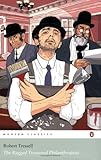
Cover of The Ragged Trousered Philanthropists, by Robert Tressell (Penguin Classics Edition)I must admit I was only vaguely aware of The Ragged Trousered Philanthropists before late last year, and had no idea of the Liverpool connection. So I’ve bought the book, and will let you know my thoughts on it if it’s relevant to this blog. I’m certainly looking forward to picking it up, and if you want to buy a copy while supporting this blog, just click on the book cover to the left. If you buy a copy after using that link (even if you choose another edition!) then a small slice of the profits will go into helping this blog break even.

If you do read it (or already have done!) let me know your thoughts! What have philanthropists ever done for Liverpool? Were their gifts to the city just guilt for their own wealthy status (often earned on the backs of the working class)? Or were they truly trying to change Liverpool for the better? Perhaps it was both.

Next time I’ll explore a couple of people who’ve had a ‘radical’ effect on the city. Who should I include?

The Census: History and Research for Liverpool (or, Why fill in the census? A historian’s perspective)

What use is the census? Does it have a role in the modern world and would we lose anything by ditching it?

Read more