Skip to content

Posts from the ‘News’ Category

English Heritage launch Heritage at Risk, including Liverpool areas

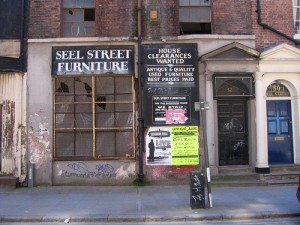
Seel Street Furniture, by Richard Carter (from Flickr)

Seel Street Furniture, by Richard Carter (from Flickr)

English Heritage launched its Heritage at Risk Register today, with wide coverage across the media. As I’ve mentioned before, Liverpool has nearly 40 Conservation Areas within its bounds, and it is these areas which come under most scrutiny in the media. The Seel Street Ropewalks in Liverpool and Birkenhead’s Hamilton Square make the list. Below are links to some of the articles on TV and in the papers:

The main thrust of EH’s report seems to be the problems of PVC windows and doors, unsightly satellite dishes and the loss of other original features of the suburbs. Though, of course, this is only the side deemed most relevant to the public, and there are many more pressing threats to the historic environment, such as dereliction, the declining economy, and uncontrolled development.

As you can see, the Daily Mail addresses the incredibly important issue of wheelie bins while others cherish their ‘tarnished jewels’. Closer to home the Wirral Globe mentions Hamilton Square. The ‘chairman’ of the Liverpool Preservation ‘Trust’ has another rant.

What are your views on the risks to your own historic environment?

Site Redesign, and Archaeological Illustration

Just a quick word to let you know that Historic Liverpool is undergoing a complete cosmetic redesign, as the home page was getting a bit bogged down, and also I visited the  final show for the Oxford Brookes/Swindon College MA in Archaeological Reconstruction, and was somewhat inspired (and unbelievably impressed!) by their work. I’ve not quite finished yet, but the new style will slowly percolate throughout the site in the coming days.

The timeline now occupies the right hand side of the homepage, with the two main interactive maps on the left. Hopefully this is a much cleaner design, and much easier to navigate. Let me know what you think!

A quick thank you to Jennie Anderson, who invited us to the show. Jennie’s website is, as you might expect from a web-leaning archaeological illustrator, a great example of attractive typography and layout, and full of fascinating archaeology too! Jennie’s MA has concentrated on interactive, Flash-based reconstruction, for such uses as visitor centres or even downloadable to your phone, to use while visiting the site. I’ll post a link here when I get one.

Site Update: New features

Having spent a lot of time working on Historic Liverpool, it’s been a while since I last blogged. There haven’t been a great many news stories to write about, but it’s time for an update on progress on the site.
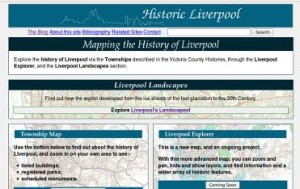
Historic Liverpool

Historic Liverpool

There are two new sections on Historic Liverpool: the Liverpool Explorer, and Liverpool Landscapes (I hope this is confusing enough!).

Liverpool Explorer (archived) is an ongoing project – a map which will display all the features that you can get information on throughout the Historic Liverpool website. It’s quite sparse at the moment, with layers for Listed Buildings, Parks and Gardens etc (the same layers visible through the Townships page), and in addition two dots on the new ‘Hidden Gems’ layer. The Hidden Gems are those things you can see in Liverpool today, which don’t (at least yet) readily fit into any other map layers. At present these only include the Church Street Cross and Williamson’s Tunnels. In time these may move to other layers, and other features will be added to Hidden Gems. Either way, this is a bit of a novelty layer, and I hope it provides some idle browsing if nothing else!

Keep an eye on Liverpool Explorer, which will collect all the features available through the rest of the site.

Liverpool Landscapes is an effort to get back to my site’s original aims: to map the archaeological landscape(s) of Liverpool and Merseyside. Have a look at What Is Landscape Archaeology? for an explanation. Each Landscape in this section will address a cross-section of Liverpool’s archaeology from a landscape perspective: how do all the sites in the theme interconnect? Initially this will include period-based landscapes (Natural, Prehistoric, Medieval, Civil War) but will grow to include a number of others. Perhaps some will seem arbitrary to you: where do religious or sporting landscapes begin and end? You may have ideas for some that you think are more important than the ones I’ve included. Please get in touch, or comment below! These are as yet unfinished; new things will be added to them and the pages will be updated over time.

Whatever your thoughts on the site, get them down in the comments section and I will do my best to respond.

Conservation Areas at risk in Liverpool

English Heritage, as part of their Heritage at Risk campaign, recently launched Conservation Areas at Risk. This will begin with a census of all the conservation areas in the country, of which Liverpool has 34. EH are often under fire for their inaction (or indeed action) on initiatives such as this, so it will be an interesting one to watch.

English Heritage also wants your help with this, so if you live in a Conservation Area and feel there’s an issue with the “wrong type of development” (as EH chief Simon Thurley puts it) then go to www.english-heritage.org.uk/conservationareas.

Liverpool’s St John’s Centre delayed

A quick snippet of bad news: like many developments all over the country, the St. John’s Shopping Centre redevelopment has been delayed by three years, the Liverpool Echo is reporting. The demand for shops has fallen as the economy slows, although the owners of the site, Land Securities, are optimistic that the demand will reach “pre-recession levels” by 2012.

St John’s was built in 1969, redevelopment which followed extensive bomb damage suffered across Liverpool city centre during the Second World War.

New Scottish Royal Commission database

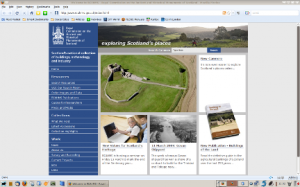
The new RCAHMS website

The new RCAHMS website

The Royal Commission on the Ancient and Historical Monuments of Scotland (RCAHMS) have redesigned and relaunched their website. From here you can search five of their databases: Canmore, PASTMAP, Scran, AirPhotoFinder and HLAMAP (explanations of each are on the website). Each record pulled back from searching links to all relevant photos in their database, along with reports and relevant books in a bibliography.

The new design looks smart, is easy to navigate, and for those (like me) for who it is important, the site works cleanly without images and CSS loading. It should work well with screen readers. I’ve not used one myself, but if you have any comments about this or other sites with that technology, feel free to vent below!

Liverpool Rebranding, and have your say in the Lime Street debate

Liverpool is no longer seen as being part of ‘the north’ – rather it has carved out irs own niche as a unique place, alongside places such as Edinburgh. To capitalise on this turnaround in its image and reputation, and in the light of Capital of Culture 08, a £150,000 branding exercise will see a new post-08 logo being plastered over a fly-over near you. You can also wear it on a sticker or a pin badge. The Liverpool Echo has details of the research and branding.

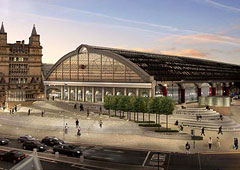
Artist's impression of Lime Street Gateway development

Artist's impression of Lime Street Gateway development

Liverpool has had its fair share of new skyscrapers in the past few years. Now the steel and glass replacement for Concourse House is no longer on the cards a debate is growing over whether Lime Street looks better or worse without a tall building on its frontage. More of fewer tall buildings in the city centre? The tower discussion goes on at Liverpool.com

Liverpool civic pride during an old Credit Crunch, and Royal Court restoration competition won

This wouldn’t be a blog if the phrase ‘credit crunch’ was not thrown about here and there – it’s the topic of the moment. But of course history has a couple of other examples of similar lean periods in the past (to say the least), and the BBC Liverpool website is currently hosting a feature about ‘Creativity in the Great Depression’.

The article details the PhD thesis (Spectacular Urban Culture in the Age of Decline: Liverpool and Manchester, 1918-1939) of Manchester University’s Dr. Charlie Wildman, who has been investigating the 1920s and 30s in Liverpool and Manchester. Dr. Wildman discovered that the city authorities invested in public transport and civic and commercial architecture during the Depression years – examples include the Mersey Tunnel, the Phil, and extensions to the Town Hall.

The most interesting feature is the £1m raised to build the Catholic Cathedral, although to quite different designs of Edwin Lutyens than that actually constructed.

In other news, Allford Hall Monaghan Morris have won the competition to restore the art deco Royal Court theatre. By the looks of the photos on that page, it seems they’ll be keeping the great 1930s architecture, while reinvigourating the interior. Good luck to them – I must mention that this is where I went to my first gig: Liverpool band the Lightning Seeds in 1997!

The link between Liverpool and Somalia, and a peek at the new Liverpool Museum

Somalia has the most interest in the word Liverpool as search term in Google – even higher than the United Kingdom. Why do you think this is? It almost certainly has to do with football, I should think, but are there any other factors?

Also, take a look at the developing Museum of Liverpool on the Architects Journal website. Of course, it calls it a ‘first look’, but we’ve all been gawping at it for years, haven’t we?

Liverpool.com salutes Port of Liverpool Building

Liverpool.com have a short but detailed article on the Port of Liverpool Building, one of the Pier Head’s Three Graces. With a few photos, and details of restoration by the building’s current owners Downing, the piece includes details of the interior and maritime decor. There’s also an artist’s impression of what Mann Island will look like from the bottom of Water Street when the new developments next to the Port of Liverpool Building are completed. Not as bad as I’d imagined, to be honest. What do you think?