Skip to content

Posts by Martin

Liverpool Heroes 1: John Alexander Brodie, City Engineer

In writing about the historic landscape of Liverpool, it’s easy to hide people from the narrative. This post on JA Brodie is the first in a series on Liverpool Heroes which aims to redress the balance. It ties in (rather loosely) with Liverpool’s Year of Radicals, celebrated in 2011.

These people weren’t radical in a left-wing sense (some far from it) but they were the pioneers, the bringers of change. They certainly left their mark on the landscape, some in subtle ways. A couple of these people are obvious choices, and some less so. Either way I hope you learn something new and interesting.

And so without further ado, and in no particular order, we begin with…

J.A. Brodie (1858 – 1934)

J.A. Brodie was the Liverpool city engineer from 1898. He became President of the Institution of Civil Engineers due to his achievements, and was the first local authority engineer to be so. The list of accomplishments is impressive, as is the effect he had on the shape of the city.

Brodie was one of the first to suggest an electric tram system for Liverpool. The city’s electric trams ran from 1898 to 1957, and even today the tracks pop up from time to time during roadworks. The Queens Drive and Prescot Road central reservations are the remains of tram routes which ran along them.

He proposed the development of a ring road, the aforementioned Queens Drive. He widened, straightened or diverted roads such as Black Horse Lane in Old Swan in the 1920s and 30s. The suburban sprawl of West Derby, Tue Brook and Childwall were still in the future. But even today Queens Drive holds up well with the volume of traffic, which couldn’t have been foreseen 90 years ago.

Brodie beyond roads

In 1905 the first pre-fab concrete tenements were built in Eldon Street. Brodie had been experimenting with concrete as a solution to the housing shortage, and in 1905 he exhibited a pre-fab cottage at the Cheap Cottages Exhibition in Letchworth. There’s probably little need to elaborate on the use of pre-fab concrete in Liverpool buildings in later years, but for better or worse (and despite trade union opposition to Liverpool’s production of concrete prefab parts) J.A. Brodie was a pioneer here.

As if being responsible for one of Liverpool’s major thoroughfairs, and a pioneer in building technology we still live with wasn’t enough, Brodie also put forward the idea for the East Lancs road, so that we can more quickly get to our neighbours in Manchester. And finally, of course, he invented the goal net, an invention of which he was particularly proud.

So: J.A. Brodie: engineer, architect, footy-dispute-preventer. And a man who’s effect on the landscape of Liverpool is visible almost a century after he died.

Image: Building the East Lancs Road 1932, released by Robert Wade under a Creative Commons CC BY-NC-SA 2.0 license

Liverpool’s Radicals

Photograph of the Robert Tressell Banner, made for the Robert Tressell Society in Hastings Taken in June 2005

Robert Tressell Banner, made for the Robert Tressell Society (from Wikimedia)

The theme for 2011 in Liverpool could be said to be a celebration of the city’s heroes. This centres around the anniversary of the death of Robert Tressel, author of the Ragged Trousered Philanthropists. This ‘socialist novel’ has been described as ‘seminal’, and sought to publicise the author’s criticisms of the greed of capitalism. It was also possibly the first novel about the class war.

Liverpool has a long and proud tradition of philanthropy (and class war…), which are still in evidence today, so although Tressel (born Noonan) had only a fleeting relationship with the city (he died here on his way to Canada in 1911) there is certainly a lot to talk about in this year of Liverpool City of Radicals.

In a couple of future posts I’m going to talk about the radicals, philanthropists and pioneers who have shaped Merseyside’s landscape (in quite broad terms!), but it’s worth starting off with a little round-up of the recent and future events celebrating Liverpool’s influential sons and daughters of all types.

Ragged Trousered Philanthropist

Robert Tressell, who died at the Royal Infirmary and was buried in Walton Cemetery, will be celebrated across February in the city.

A memorial service for the author took place on 3rd February, including a recreation of his funeral. Then, readings from his most famous novel will happen on various days until 15th February.

See the Liverpool City Council Robert Tressell Celebration page for three radical events which happened in 1911, and the plans for this year’s commemorations.

Liverpool Discovers

One thing Liverpool is doing more and more prominently each year is art, and so Liverpool Discovers will be one of the best ways to find out about the great discoveries and inventions which can call Liverpool ‘home’.

Liverpool, the Wirral and St Helens will be the venue for a trail of art installations celebrating the lives of Liverpool’s greats, from Stephenson and his Rocket and Jeremiah Horrocks to suffragette Mary Bamber and Ronald Ross, who discovered malaria’s mode of transmission in the world’s first school of tropical medicine.

There’s now a map for you to download and follow to take in all these artworks, so get your walking shoes on and hit the streets (from 14th February!).

Set in Stone

Slightly less Liverpool-centric, and with a questionable level of focus, is a project which is part of the Central Library redevelopment.

Liverpool City Council wants you to have your say in the selection of works to adorn a ‘Literary Pavement’ leading up to the entrance. Titles from books, cinema and music have been nominated, meaning Sgt Pepper’s Lonely Heart’s Club Band sits next to The Very Hungry Caterpillar.

As I mentioned, this is less Liverpool-centric, but another element of the project is to have a ‘Literary Liverpool’ display on the rear of the building. This gives all its space to Scousers, including Beryl Bainbridge, the late Brian Jacques, and Robert Tressell himself (ok, so we seem to have fully adopted him as an honorary Scouser).

Your role is to vote for who lands on the Pavement and who sticks to the Wall, so go and vote!

Recommended Reading

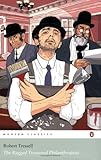
Cover of The Ragged Trousered Philanthropists, by Robert Tressell (Penguin Classics Edition)I must admit I was only vaguely aware of The Ragged Trousered Philanthropists before late last year, and had no idea of the Liverpool connection. So I’ve bought the book, and will let you know my thoughts on it if it’s relevant to this blog. I’m certainly looking forward to picking it up, and if you want to buy a copy while supporting this blog, just click on the book cover to the left. If you buy a copy after using that link (even if you choose another edition!) then a small slice of the profits will go into helping this blog break even.

If you do read it (or already have done!) let me know your thoughts! What have philanthropists ever done for Liverpool? Were their gifts to the city just guilt for their own wealthy status (often earned on the backs of the working class)? Or were they truly trying to change Liverpool for the better? Perhaps it was both.

Next time I’ll explore a couple of people who’ve had a ‘radical’ effect on the city. Who should I include?

The Census: History and Research for Liverpool (or, Why fill in the census? A historian’s perspective)

What use is the census? Does it have a role in the modern world and would we lose anything by ditching it?

Read more

Historic Liverpool 2010: A year in review

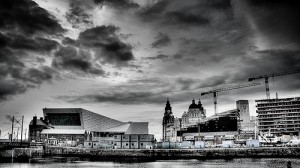
Photograph of Liverpool waterfront, including new museum under construction

Liverpool Waterfront, by Ade Bond via Flickr

It’s the end of 2010. It’s been an… interesting year politically – a coalition government for the first time in my lifetime; frequent use of the word ‘swingeing’ in many and varied ways; the Conservation Centre is shutting its doors to the public; and snow is keeping you indoors reading this.

But what else has happened this year? Anything to warm our annual nostalgia cockles?

2010 started on an optimistic note – it was the World Museum’s 250th anniversary, though this was somewhat overshadowed with the closure of the Conservation Centre.

February saw start of the excellent Streets of Liverpool blog. Later in February the keys were handed over for the new Museum of Liverpool, although controversy rose its ugly head later in the year when a historic view was shown to have been blocked.

March and April went by in a blur (oh yes, probably because I got married) and when things recovered the election was fast approaching. At the same time Lewis’s was heading for closure as everyone felt the pinch of recession.

In July the first object – a carriage from the Overhead Railway – moved into the museum, but at the same time the North West Development Agency closed its doors. Another funding source for culture had disappeared.

The Peel Waters project cropped up again and again in 2010. English Heritage expressed concerns about the effect of the new buildings on the World Heritage Site, while in later months Council Leader Joe Anderson reacted angrily to what he saw as EH’s interference with Liverpool’s development and future prospects.  Meanwhile we were spoiled for heritage and arts projects, including: Edge Hill station being turned into an arts venue, Heritage Open Days bringing people into Liverpool’s historic water supply, the funding of conservation for 95,000 aerial photographs of England as well as Visible in Stone – women’­s history and the built environment and in October Black History Month. Finally, Historic Liverpool underwent a bit of a redesign, although it’s far from a finished project. Here’s to another year of additions to that!

Phew! Liverpool and its heritage have had their ups and downs this year. We’ve celebrated the old, welcomed in the new (mostly) and commemorated the highs and lows of Liverpool’s past and imminent future.

Any predictions for the coming 12 months? Or is that an impossible task? And as for 2011, what kind of posts would you like to see here? More about researching Liverpool local history? Should I keep to the news and concentrate the history on Historic Liverpool? Or something completely different?

Liverpool Central Village – a lesson from history?

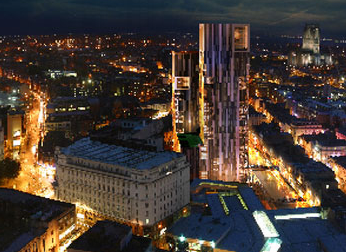
Nighttime aerial view of how Liverpool Central Park will look

Liverpool Central Village, development by Merepark

This week the developer Merepark unveiled a slick video showing the world what the new Liverpool Central Village will look like. Central Village is the name given to the array of shops and flats which is to be built to the north of Bold Street, and which will take in the vacant Lewis’s building on Ranelagh Street.

The thing which struck me was how similar Central Village will look to Liverpool One. The architecture is modern but not brutalist (much). Random colour schemes and harsh corners, but no 60s Piggery nightmare. The brands are all familiar too, with Odeon Cinemas being the most prominent.

But the question raised by the video is ‘Does Liverpool need another (mini) Liverpool One?’ Joe Anderson rightly hails the thousands of new jobs which this development will create (during and after construction), but what can history tell us about how this may pan out?

The last great wave of investment

During the Second World War Liverpool was seen as a great place to site Royal Ordnance Factories (ROF), where munitions were produced for the war effort. It was away from the dangers of bombing which London suffered from, and out of town sites like Speke, Aintree and Kirkby were away from the bombs falling on the docks, yet well connected to those docks by rail, so easing the transport of raw materials coming into the port.

When the War was over the ROF sites adapted to become part of the new economy of the mid 20th Century. Tax incentives encouraged large companies to site factories in these areas which were unrestricted in their growth – there were few neighbours in the area and the land was flat.

There was also a ready-made labour force in the form of the thousands of people who were being moved out of central slums into new council houses, maisonettes and high-rise flats.

There were many problems with these out-of-town estates, and none more famous than the layoffs during the 1970s and 80s. Even then Liverpool was starting to develop its reputation as a city of strikers and protesters, and of a self-pity growing from a feeling of victimisation. Liverpool often asked itself: ‘Why always us?’

Part of the answer presents an interesting dilemma to those who are championing this new development. The problem with the closing factories was that they were branches of multinational corporations. These corporations ‘always’ chose Liverpool because it was the easy choice. There were no vested interests in the city, no love for the place or its people. They were here for the money, and when that left, so did they.

I don’t blame Joe Anderson for celebrating the continued surge in development in the city he loves (and this blog isn’t going to turn into an anti-Anderson moan despite the tone of recent posts!). You certainly can’t take the jobs away from the people who will definitely be employed to build the Village, and who will be staffing the shops and shiny cinemas once it’s complete.

But if history can tell us anything about our own time (and this is what this blog is about) then it’s that investment in an area is strongest when the investors have a stake in the place they’re coming to.

Having lived in places as diverse in beauty as Oxford and Swindon I’m well aware of the standard arguments against the effects of ‘clone towns’ on the quality of life in a place. One of the Liverpool’s strengths has always been its range of independent – and locally based – shops which make a trip into town an often rewarding one (think News from Nowhere, Hairy Records, Quiggins and even Wade Smith). The area around Bold Street is one of the best areas for this.

But the appearance and choice in clone towns is not the only issue, and the architecture is not in question here. The experience of those protesters at the gates of the automotive plants brings home the fact that, for long term success, a local economy must not be reliant on the continued interest of outside money.

What do you think? Will the new developments be unparalleled successes? Or is history doomed to repeat itself as Liverpool continues its transformation into a modern shopping destination?

The British Side of Liverpool Cosmopolitanism

Photograph of the Welsh Presbyterian Church on Princes Road, Toxteth, Liverpool
Welsh Presbyterian Church on Princes Road, Toxteth (Old Liverpool Church, by Exacta2a)

Liverpool is famous for many things. Its long-held cosmopolitanism is probably one of those you can remind Scousers about without too much eye-rolling.

Liverpool has a history of being a world port, and notoriety for its role in the African slave trade. These have, perhaps more than any other factors, helped forge the city’s image as a – cliche alert – ‘melting pot’.

But don’t forget just how much influence incomers from our own isles have contributed to the city’s landscape and character. As a landscape archaeologist this has usually been of only side interest to me. But since reading Our Liverpool, and the epic Liverpool 800, I’ve come to realise just what ‘Liverpool Cosmopolitanism’ can mean.

I also feel a greater understanding of the way people from all over Britain (the ‘Celtic’ areas) come together to make Liverpool the individualistic town it is.

The British in Liverpool

I can’t judge as an expert, but Liverpool 800 draws the lines between the characters of Irish, Scottish and Welsh immigrants fairly clearly

The Liverpool-Irish

The Irish are some of the most famous of Liverpool’s incomers. Both sides of my family (the Crilleys and the Greaneys) came over from Ireland in the 19th Century. I can guess that a large proportion of Liverpudlians reading this could trace a similar lineage.

A huge number of Irish migrants came over fleeing the potato famine in the middle of the 19th Century. Their numbers rose quickly, and landlords lost no time stuffing them into tiny and unclean court houses. They arrived poor and lived in squalid conditions. Their communities had a reputation for harbouring diseases, and conflicts often arose out of this with their neighbours (see below).

On the other side of the coin, yet still probably due to their great numbers, the Irish community contributed more than other groups to politics. The sectarian troubles of their homeland accompanied them across the Irish Sea. But in addition to the differences between Protestant and Catholics the Irish community took part in electoral politics. Irish Catholic clergy were elected to School Boards. Pub landlords like Hugh McAnulty and Jack Langan lent their premises to meetings of various activist groups. Austin Harford, a successful cloth merchant, led the Irish Party from 1903 to 1923, and became the first Catholic mayor in 1943.

As Liverpool 800 has it, ‘Liverpool-Irish’ was a distinct ‘hypenated identity’. Some sought to distance themselves from their roots to “effect the quickest way out of the Liverpool ‘ghetto'”. But it seems that as a distinct group the Irish were very active in all parts of Liverpool life. For example, William Brown, funder of the Museum which sits on the road named after him, was an Ulsterman.

Cymry Lerpwl

The Welsh, in contrast to the Irish, appear at first to have kept themselves to themselves. As Liverpool 800 (p345) puts it, they “looked after their own”. Having not come as far as the Scottish and Irish, many only stayed as long as it took to make their fortune and move back home. Others came seasonally to work, travelling along the coastal trade routes of north Wales.

The language barrier exaggerated the Welsh insularity that the Irish never found trouble overcoming. The Welsh became known for their building skills, and the various groups of ‘Welsh Streets’ of ‘Welsh Houses’ developed as a hallmark. In addition, Liverpool was scattered with the Welsh chapels which still stand across the city today. In a way these were enclaves which may have helped isolate the Welsh from wider involvement in, for example, politics.

However, in later years there were movements to end this isolation. Campaigners saw education as a barrier to the Welsh becoming something more than admired builders and architects.

Even as the Eisteddfod and St David’s Day celebrations took place on Merseyside there were encouragements to “Amalgamate … with Anglo-Saxons – in other words, the English”. Though “they loved their language [and] they loved their country” they also “loved their Queen”.

However, perhaps due to their lower numbers, although they took part in electoral politics they never left the mark in the way the Liverpool-Irish did.

Liverpool Caledonians

As Belchem and MacRaild admit in their chapter ‘Cosmopolitan Liverpool’, the Scots are relatively unstudied in their roles within Liverpool history. The journal Porcupine suggested (1877) that “had it not been for the enterprise of the Scotchmen, Liverpool would not have emerged from its early obscurity”.

It was individual Scottish men, rather than communities, which seem to have made their mark on Liverpool. Sir John Gladstone, father of a future Prime Minister, moved to the city from Leith. He was a commercial man, as were many of his fellow Scots, including Samuel Smith, the ‘Cotton King of Liverpool’.

Commerce was not the only professional contribution of Scotland. Dr. Duncan, the first Medical Officer for Health, was just one of the leading lights in medicine of Scottish origin.

The skilled Scots tended to cluster further from the docks than their Irish contemporaries, right on the outskirts of the north end of the city. This, Belchem and MacRaild tell us, was partly due to no little antipathy between the Scottish and Irish. Dr Duncan, a prominent Scot outspoken on matters of health and living standards, may be the source of the widespread view of the Irish living in filthy and overcrowded courts.

British Liverpool

I’m usually more interested in the bricks and mortar of the city – the landscapes of roads and fields. This means the topic of people has always played second fiddle to the built environment. But Liverpool 800 has given me a glimpse into the roles into which the ‘Celtic’ nations fitted in Victorian Liverpool.

Having said that, one of the things which struck me were the well-defined lines between what the Irish immigrant could expect to find when he arrived from Belfast compared to the life of the Welsh builder or the Scottish shipwright.

Was the truth of the matter so clear cut? I’m sure it wan’t, but what impressions do you get of the Irish, Scots and Welsh in historic Liverpool? Was it the numerous and politicised Irish? The skilled or highly educated middle and upper class Scotsman? And the quiet, insular Welsh communities with their occasional outbursts of Eisteddfod extravaganzas?

Or none of these things?

Image: old liverpool church by ,joe neary on Flickr, released under a Creative Commons license.

Our Liverpool, by J.P. Dudgeon

The psychological landscapes of Liverpool drawn out through oral sources of history, new and archival.

Read more

Poor architecture, not heritage, is preventing investment in Liverpool

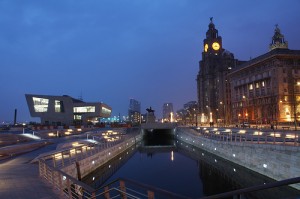
Photograph of Liverpool Pier Head looking north up the new canal extension

New development hand in hand with heritage, by Radar Communication via Flickr

Council Leader Joe Anderson has hit out at English Heritage for what he sees as the over-reaching influence and meddling of the ‘heritage lobbyists’ in the future development of Liverpool.

Anderson’s current gripe is related to the Liverpool Waters project, which English Heritage advised to be reduced. Since their input, the number of tall buildings has been reduced, and the centrepiece Shanghai Tower moved back from the waterfront.

The Daily Post has a balanced editorial stating that heritage matters should be considered hand in hand with development progress, and points out that many historic buildings have been brought back into use successfully in this and other cities. Coincidentally, part of the current Biennial art festival concentrates on the re-use of derelict buildings for public enjoyment.

So does heritage hold back development? As Naomi Peck, project manager of Peel’s Liverpool Waters development team said: “English Heritage would most probably be happy to see everything as it is, because that is what they do – they preserve old buildings… The scheme could have been perhaps a little more magnificent, but obviously we had to take into consideration it is a World Heritage Site.”

So, English Heritage preserve old buildings, and World Heritage Site = no magnificence, thank you very much.

Yes?

Developers preventing development

Looking at this from the other direction, is heritage really the stumbling block? Is the Albert Dock a less ‘magnificent’ development because of all the heritage? Or is the heritage key to its attraction? (OK, enough rhetorical questions.) The flats at the King’s Dock and in the former warehouses at the Waterloo Docks are massively successful examples of historic buildings reuse which have not harmed the historic environment. There are other developments – the very magnificent Great Court at the British Museum and World Museum Liverpool, for example – which have added modern architectural elements to historically important buildings.

However, Joe Anderson shouldn’t be surprised or dismayed when ‘heritage lobbyists’ kick up a fuss about wrecking a World Heritage Site with modern ‘ego architecture‘ (subscription required) – massive developments which are all about money and prestige, and nothing about quality of life in the long run. Anderson may have a different point of view, but I don’t want Liverpool to turn into the Shanghai/New York of the West/Europe. I want Liverpool to be The Liverpool.

The solution to Anderson’s problem is not to stop groups like English Heritage and the Civic Societies from airing their views. Rather it is for the architects to produce creative, attractive modern designs keeping in scale with the current landscape. Even completely new builds like Liverpool One can achieve this, and the Echo Arena for another great example: it’s unashamedly modern (and I’d say attractive), but it doesn’t try to take over the whole skyline.

Compare this imagined scenario to the original article:

He said: “The Wellington Rooms, in Mount Pleasant, and other listed buildings are lying derelict because of the poor designs by the architects would have trashed the building.

“The former Irish Centre was the subject of a planning application, which was even supported by the Bishop, to attach some sort of hotel on it. The architect, supported by the leader of the city council, stopped it going ahead by failing to produce a decent building, and now it is deteriorating in front of our eyes.”

OK, so that’s a bit of fun, but remember: it’s not investment that English Heritage are blocking, nor development. It’s poor architecture. There’s one easy way to get development going, and that’s to design something creative, with life-span and beauty, and which adds to, and doesn’t replace, the amazing architecture we have been left by those who came before us.

Note: all views in this post are my own.

History of Croxteth Park now online

Quite a short one for you today. I’ve just completed the Historic Liverpool page on the history of Croxteth Park.

The township of Croxteth Park naturally includes most of the park itself, but funnily enough not Croxteth Hall itself. This is still a very wooded area today, and originally was part of the vast hunting forest which stretched from Toxteth to Simonswood. This meant that the area didn’t get built on for hundreds of years, and only really saw development in the 1980s when the estates of Coachman’s Drive and Fir Tree Avenue appeared.

Before then the nearest development was in Gillmoss, which grew from a tiny collection of cottages and farm buildings into a classic example of post-war large scale development.

Even now, Croxteth Park sits on the edge of Liverpool, and remains a ‘green lung’ for anyone in the city to enjoy.

New mapping websites for Liverpool history and beyond

Photo showing flats on Scotland Road, Liverpool, soon to be demolished

View from across Scotland Road, by SomeDriftwood via Flickr

If you follow me on Twitter you’ll already know that I’m currently writing the Croxteth Park page for Historic Liverpool. So while the blog might be a tad quiet at times, I want to share today a couple of websites: one of interest to Liverpool local history and family historians, and another which has a global scope but which may well build into a resource for the Liverpool-focused.

There’s also a map-related news story for you.

Lost Tribes of Everton and Scotland Road

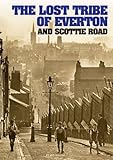
The new book by Ken Rogers, The Lost Tribe of Everton & Scottie Road, covers the period when the masses of terraced housing in the northern inner suburbs of Liverpool were demolished. The communities in the area were scattered to places like Speke, Kirkby and Skelmersdale, and the houses replaced with Everton Park and the entrance to the Kingsway Tunnel.

Ken went through the electoral role for 1960 to find all the people who lived in the now-gone communities, and collected memories and stories for his book.

The amazing thing about the companion website (and a brilliant example of how to use the Internet to accompany a traditional book) is that you can actually search for the people in the ‘lost tribe’ by family surname or the name of the street they lived in. One thing to note, however: make sure you click on the Search tab to be taken to the search page first. I found that the home page search didn’t work for me.

This site is a great resource for family history as well as people who want to reconnect with those they used to live near. There’s an active discussion going on at the site, so do pop along and report back if you rekindle any long-lost friendships!

A lot of the stories are also of course collected in the book itself. And best of all the website has a string of old maps and photos of the area. Might come in useful when I come to be updating the history of Everton page next.

SepiaTown

I found this site via Seb Chan, who’s known in the Museum world for his work bringing archives and exhibits to the wider public through the Internet.

SepiaTown is a site which maps photos, video and audio clips. It wants users (including museums and similar organisations) to upload their old photo collections for the entire world to gain the benefit.

It’s best collections are in places like London, New York and, partly due to the work of Seb Chan and colleagues, Sydney. However, there’s a couple of photos around – though not in – Liverpool (just type it into the search box, then zoom out) and if anyone has any more images they’d like to share, this number will increase.

I have a handful of old postcards which I keep meaning to scan in, so perhaps I can lend a hand.

Memories of Park Lane

And if you’re feeling a bit left out with talk of the northern suburbs, National Museums Liverpool could have the answer for you. They are looking to hear from  people with memories of living near the southern and central docklands from the 1950s to 1970s.

The Mapping Memory project team ran a workshop at Doreen’s Cafe last month, focussing on Park Lane. They recreated the landmarks (pubs and shops etc) on a map as part of the project. The project page on the Maritime Museum website gives more detail. More for you to contribute to!

Further Reading

Ken Rogers’ book The Lost Tribe of Everton & Scottie Road is available now through Amazon. If I’ve whetted your appetite for exploring the area and you’d like to support this blog, please click on the book cover to buy it through my Amazon affiliate link.