Skip to content

Posts by Martin

Docks, Drinking Dens and Development Committees
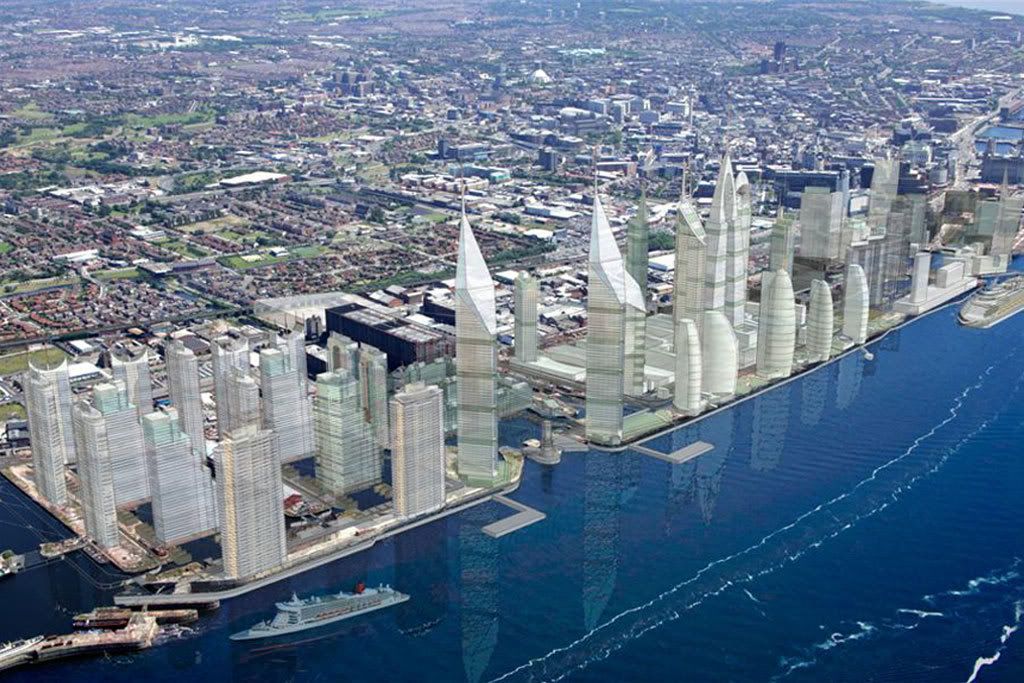
Liverpool Waters image by Jaybuoy

Liverpool Waters image by Jaybuoy

Peel’s Liverpool Waters scheme has reached another milestone with their plans for Birkenhead Docks being submitted to the local council. The Northbank east section has already been approved, but this East Float part is apparently the UK’s largest planning application.

Peel hopes the Mersey estuary will rival Shanghai and Sydney once the development is completed, and the artists’ impressions I’ve seen certainly show a massive change from what the area looks like now.

Perhaps I’m being old-fashioned, or at least conservative, but to me this will completely change the character of Liverpool and the Wirral. I’m not opposed to big cities per se, but what I love about Liverpool is the human scale of it all. Say what you want about the Mann Island development and the new Liverpool Museum, but the size (if not the design) of these buildings fit with the character of Liverpool. So does Liverpool One. The forest of skyscrapers promised by Peel will remove that feeling, and alter the balance and focus of the river bank. No longer will the Three Graces be the prow of the good ship Liverpool. All eyes will be on Peelsville.

I’d dearly love to see the vast swathes of dereliction in Liverpool and Birkenhead brought back into use (see for instance my earlier posts on Stanley Dock). But whether historic buildings are brought into use or new development takes place, I’m sure there are better, more individual ways of doing it. Discussions on Yo! Liverpool certainly show enthusiasm for the project, although there are some who want tougher questions asked.

Perhaps the new version of Liverpool – Peel’s version – will be a hugely exciting place to live and work, but I fear that I’ll feel a little lost in it all. The plans concentrate in the north docks, so perhaps both towns can successfully contain their ‘scraper cities’. What do you think?

Liverpool’s own scrutiny committee

Speaking of my recent Stanley Dock article, I was contacted by Peter Baines, Local Government Improvement Adviser for English Heritage, who pointed me in the direction of Liverpool City Council’s Regeneration Select Committee. Peter tells me that “these committees hold in-depth reviews on all manner of policy areas and make recommendations to the Council’s Executive / Cabinet about how things can be improved”. This page shows how open this committee is, with agendas and minutes posted for all their meetings. The page also lists their responsibilities, which to me look like exactly the kind of progress and development we should be after.

Thanks, David! Good to know we have these committees!

When Christmas shopping gets a bit much…

Liverpool.com has a great little article on the best pubs and bars to be found in the city centre. From the Grapes and Carnaevon Castle to the Richmond and the Globe, the list gives away some hidden gems in Liverpool’s pub landscape. Have you tried any?

Liverpool Landscapes and Historic Liverpool go social!

If you’re a regular reader (and if not, why not?!) then you may have noticed the headlines in the left-hand bar. These are my posts on the new Historic Liverpool Twitter page! Click straight through to the stories from this blog, or follow all the updates at @histliverpool.

You can also keep an eye on all the links used in this blog by going to the Historic Liverpool Delicious page. This is a site where I can publicly bookmark interesting pages, and keep them collected in one place.

Both these pages can be viewed without opening an account, and you can keep up to date with each page by adding their URLs (Delicious, Twitter) to a feed reader.
Impacts of Capital of Culture

The University of Liverpool and John Moores University are assessing the impact of the 2008 Capital of Culture year in a project called Impacts 08. Research has gone on since 2005, and is now at the stage of judging the effects the year had on the city of Liverpool.

Already a whole load of reports are available divided into themes of economics, taking part, culture and the arts, as well as others. My eye was naturally drawn to Liverpool 08 – Centre of the Online Universe, which covers the web and social media (unfortunately my own sites don’t get a mention :)).

You can follow Impacts 08 on Twitter, or on the Impacts 08 blog.

I was going to pick and choose a couple of read, but to be honest, these all look like interesting stuff! Let me know what you think of these in the comments section below. Do they reflect your experience? Did they miss anything out?

Trading Places: A History of Liverpool Docks

Trading Places - a history of Liverpool's dock system

Trading Places: A history of Liverpool docks

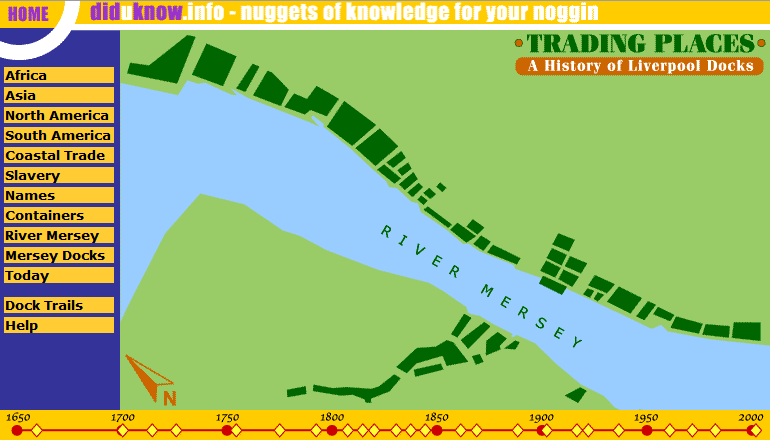
This looks like a fairly old corner of the Liverpool Museums site, but Trading Places is a simple and informative interactive map of Liverpool’s dock system and its history. The left-hand menu highlights the docks involved in trade with different parts of the world, as well as the docks’ names and the very reason for the dock systems construction. There’s also a timeline of significant dates along the bottom.

This is a great little tool, and its slightly old-fashioned look and pop-up windows just reflects the simplicity of getting the information across. I’ve been playing around with interactive web maps for a good few years now, so it’s great to see what can be achieved very simply. There’s even an accessible version (click on “begin the voyage”)!

Kudos to Laura Davis’ blog on the Daily Post website, whose advent calendar pointed me to this site, and which has been an lovely little source of historic websites over the last week! Trading Places is the destination behind door 11.

Christmas is on its way!

Sorry if that worries you as much as it does me, but to cheer yourself up have a look at National Museums Liverpool’s advent calendar! Apparently it looks like the one they did last year, but as I missed that one, it looks great to me!

Each day reveals a new phase in the exciting adventures of… well, you’ll have to look for yourself.

Liverpool Blogs, an exhibition, and more of interest from the LHS

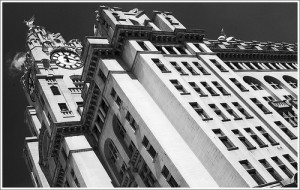
Liver Building 2, by gloskeith (Creative Commons via Flickr)

Liver Building 2, by gloskeith (Creative Commons via Flickr)

I’d like to start this post with a kind of ‘metablog’. I would have liked to have made that word up myself, but a quick Google proves otherwise. Either way, the Liverpool Blogs blog is a blog about blogs. Try saying that after a Cains or two. I’ve only just discovered this site, and not had time to explore fully, but if you ever want to read more about Liverpool, then it’s the place to start.

The latest post as of this writing is a profile of the Scandinavian Church on Park Lane, which blogs at Save the Scandinavian Church in Liverpool. This site charts the events held at the church, and the ongoing efforts to keep this church in Liverpool. Apparently the mother church in Uppsala, Sweden wants to move the church to somewhere else in the world! The blog also posts in Swedish, so is certainly the real deal in terms of Scandinavian culture on Merseyside. Certainly a site of interest to readers of Liverpool Landscapes.

As for Liverpool Blogs, I’d recommend having a search through their links. If you’re a Liverpool blogger yourself, get in touch with them. I’ve no doubt I’ll be linking to this site in the future, and keeping an eye on it for new and interesting blogs!

Of interest to us Landscapophiles (a word I definitely just invented) is the Liverpool Echo’s Love Where You Live photo competition. The Echo is looking for images that demonstrate why you love where you live, but also illustrate the importance of caring for the environment. Two shots from Flickr have been uploaded as examples. There is also a secondary category for shots of people “who make a difference”.

The Feeling Listless blog discusses a new exhibition, Building Merseyside: A Contemporary Interpretation of the Architecture of Liverpool and the Surrounding Area, taking place at St. George’s Hall. The exhibition includes photography, sculpture and painting. The author, Stuart Ian Burns (the only Stuart Ian Burns around), makes a few good side notes on the fun of looking up at the buildings you might only ever consider to be shop fronts for HMV, Bhs or Dixons if you kept your eyes to ground level.

Finally, if you’re historically minded and you still haven’t looked at the Liverpool History Society Quetions blog, then do yourself a favour and go and have a look. Recently there have been three interesting posts about Liverpool’s urban archaeology: Botanic Gardens Wavertree, Martin’s Bank and St James Cemetary (sic) Tunnel.

In case you’re wondering, the Martin who asked the question is not me. And neither is the Martin of Martin’s Bank. Never mind.

Liverpool’s Redundant Buildings (or, What future for Stanley Dock and friends?)

Stanley Dock, by Tim.Edwards

Stanley Dock, by Tim.Edwards, via Flickr

There has been a certain amount of interest in my post on re-using Liverpool’s derelict buildings and in particular the derelict tobacco warehouse at Stanley Dock, which many (me included) would like to see regenerated. A few questions remain, such as the problem of too-low ceilings (are they too low? How low is too low?). If this is a problem, are there any other uses to which the huge building could be put (See ‘Stanley Dock Tobacco Warehouse below)?

There is also of course the larger problem of the isolation of the warehouse and other buildings down that part of the city. It’s handy for the town centre, but a little too far to walk, but possibly not worth driving in.

We could sit around here all day discussing the problems of regenerating the warehouse area, but I’d like to keep the focus on the wider issue of the redevelopment and re-use of derelict buildings, of which there are many around Merseyside. There are other cities in the country who have already taken up the challenge. Four of them are mentioned in the English Heritage (EH) publication Making the Most of Your Local Heritage: A Guide for Overview and Scrutiny Committees, downloadable from the HELM website (and which actually has a photo of our own fair city on the cover).

Although the booklet is aimed at those already involved in local heritage and planning issues, any of us can take its advice on how to make the most of our historic landscape and the buildings in it. Of particular interest is Case Study 3, Wolverhampton and Heritage at Risk: Protecting the Irreplacable (can you see where this is going? ;)).

A quote:

Wolverhampton City Council recognised the considerable potential of redundant historic buildings when in 2004 a scrutiny panel was established to investigate how an increasingly uninhabited historic environment could be used as an effective impetus for regeneration. The review attracted widespread attention amongst the local press and community as the Panel sought to establish how new uses could be found for a significant number of historic buildings…

Their report found that a crucial factor for success was the partnership between the City Council and developers, and recommended a set of character appraisals for important sites and other areas at risk. Could this be a solution for Liverpool? Does Liverpool have a similar process or committee? And what role can local residents play in the absence of such organisations? (Check out the advice for Heritage Champions on the HELM website).

Stanley Dock Tobacco Warehouse

I’ve found an old Liverpool Echo story referring to plans to regenerate the whole warehouse area from Dec 8th 2003, with “1000 building and permanent retail jobs” by 2008. I think we all know what happened to that optimistic scheme. Originally, owners Kitgrove had planned to demolish the building and keep the north west supplied with bricks “for the next decade” (the warehouse is the largest brick building in Europe). Luckily heritage groups and the city council opposed the plans.

Another scheme to regenerate “starting in 2009” was reported in June 2008 (scroll down to Stanley Dock).

A problem both articles mention is that little light manages to make it into the centre of the building, requiring that it be cored out to create a central atrium, something akin to the entrance to World Museum Liverpool. Also the general complexity of the building means options are limited for re-use. Nevertheless, past projects were ambitious: “There will be an exclusion zone on part of the roof to provide a nesting area for peregrine falcons.”

Useful Resources:

Ownership of buildings in the Liverpool Mercantile City World Heritage Site (see p3): http://www.liverpool.gov.uk/Images/tcm21-32550.pdf
World Heritage Site Management Plan: http://www.liverpool.gov.uk/Leisure_and_culture/Tourism_and_travel/World_heritage_site/Management_plan/index.asp

Awards Awards Awards for Liverpool

As you might gather, it’s all about the awards this week – bidding and winning.

First up, it’s the brilliant International Slavery Museum, which gained an honourable mention at the UNESCO Madanjeet Singh Prize for the Promotion of Tolerance and Non-Violence, awarded every two years. The museum achieved this through its ongoing work to commemorate the lives and deaths of millions of enslaved Africans, and also the legacies of slavery (racism, injustice, exploitation). François Houtart (Belgium) and Abdul Sattar Edhi (Pakistan), from Belgium and Pakistan respectively, shared the $100,000 prize itself this time.

The Black-E (formerly the Blackie) arts centre in the Great George Street Congregational Church has been awarded £50,000 of Heritage Lottery Funding to preserve its archive. The archive consists of 57,000 photos and slides and 22 filing cabinets of documents, and the project will take three years to complete. Of most interest to me, and I should think to you, is that at least some of these images and documents will end up online. As Wendy Harpe, a founding member of the team, puts it: “we’re not preserving this stuff just for the sake of it”. In addition, parts of it will be put on CD or DVD, although the article doesn’t say whether these will be available outside the Black-E itself. The physical archive will remain at the Black-E or somewhere else in the city. What’s notable is that the current Black-E website has a holding page for a ‘Museum’ section, which would be the natural place for the archive. Looking forward to seeing what comes out of this!

The final award goes to the PR campaign which kept the phrase ‘Capital of Culture‘ ringing in your ears all last year. The campaign, a co-operation between Liverpool City Council and the Liverpool Culture Company, was awarded the Best Public Sector Communications Campaign at the How Do awards this week. I think it’s clear to everybody just how much coverage the event got, locally and nationally, and it’s even been hailed the most successful Capital of Culture programme ever by the European Commission! More facts and figures about how great it was on the ArtInLiverpool blog linked to above.

Liverpool is now bidding to become the first English UNESCO City of Music. Only four other cities can lay claim to the title, including Glasgow, Bologna and Seville. Councillor Warren Bradley pinned down the importance of music to Liverpool: “Music is in Liverpool’s blood… from the days of sea shanties and Merseybeat to classical and dance.” Not sure when the ‘days of sea shanties and Merseybeat’ were, but you get his point. The most exciting thing for me is that a four month long mapping exercise will show where music is being made and played, and submitted in support of the bid. To be honest, they could do worse than to have a look at the Popular Musicscapes project funded by the AHRC and mentioned in one of my own posts a couple of years ago. Hopefully they visited the excellent Beat Goes On exhibition at World Museum Liverpool.

Well, that’s quite a long post! Any other awards we should go for? 🙂

Conservation Areas – Conservation Bulletin

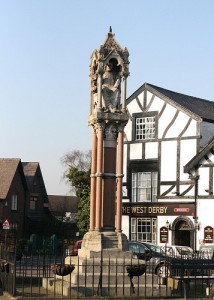
West Derby is one of nearly 40 Conservation Areas in Liverpool

West Derby is one of nearly 40 Conservation Areas in Liverpool. West Derby 2, by Mrs Magic via Flickr

Every month or so English Heritage releases a new issue of Conservation Bulletin (ConBull), and the latest issue is on Conservation Areas (available in PDF and Microsoft Word formats). Conservation Areas (CAs) were created with the aim of ‘preserving and enhancing’ the built character of a location, and it’s worth flicking through this ConBull for its relevance to areas of Liverpool.

The document is the collected work of experts in the field of conservation, though what is refreshing in recent English Heritage publications is the emphasis on a balance between preservation and development, which can often be in stark contrast to the most conservative Nimby opinion pieces (you know who you are!).

This issue thankfully takes into account the social and economic benefits of preserving historic urban and rural areas, which can only aid the argument for their protection. The whole publication aims to integrate CAs into a positive role as part of the planning process, partcicularly in struggling economies where CAs can easily be cast as an an obstruction to recovery.

What is revealed is that Conservation Areas, in the British sense, are unique in the world – other countries tend to include natural formations within the Conservation Areas definition (what we might in the UK call Sites of Special Scientific Interest, or perhaps Nature Reserves). Examples of this type can be found in China, Australia and Mexico, and this magazine visits all three areas for a comparative look.

Of major interest are the methods by which Conservation Areas are designated. Just as it is useful to know your chances of getting a local building listed, it pays to understand how the professionals judge the importance of CAs, and how the practice of dealing with threats to them works. This issue of ConBull is therefore useful if you live in and wish to help conservation efforts in a local CA.

As an interesting aside, it is reported in this issue that Sefton Park was valued by CABE at £105 million. I’m not sure what this price was based on, but it helps put the Park into context of the interest in economic value of CAs.

The most promising thing about this Conservation Bulletin, and a lesson for us all perhaps, is that it shows that English Heritage do not consider Conservation Areas to be ‘set and forget’ designations. They are part of the planning process, part of people’s living and working environments, and as such should be considered as evolving parts of the landscape, just like the cities in which they sit.

Do you live in one of Liverpool’s Conservation Areas? What are your attitudes to change? What’s distinctive about the place and what is under threat?

Conservation Areas were created in 1967 as part of the Civic Amenities Act. There are 9300 in England, nearly 40 if which are in Liverpool. The aim of CAs is to allow authorities to “determine which parts of their area are areas of special architectural or historic interest the character or appearance of which it is desirable to preserve or enhance” Planning (Listed Buildings and Conservation Areas) Act 1990 (c. 9) (c. 9)

Liverpool’s Heritage Counts

The Embassie, by Fabio Mascarenhas via Flickr (CC)

The Embassie, by Fabio Mascarenhas via Flickr (CC)

Just a quickie today: English Heritage recently released their eighth annual Heritage Counts report. On their website the country is divided into ten regions, of which the North West Region (Merseyside, Cheshire, Great Manchester, Lancashire, Cumbria) is one. The page on this region includes a summary report (PDF) as well as a number of other documents in PDF and XLS format.

The summary report has details of the number of historic sites across the North West (listed buildings, world heritage sites etc), and details the managing of the historic environment in relation to how it was done in 2002/3. Managing Positively talks of an increase in scheduled monument consent and conservation area consent, showing that the North West remains a changing landscape, despite its thousands of historic ‘assets’.

Sections on Participation and Education show that more families and schools are visiting National Trust properties, and Heritage Protection Reform promises that a new integrated approach to conservation will be possible when such reform has been completed.

Have a look at the report yourself, glance through the tables and let me know what you think! Of course, my favourite part is that World Museum Liverpool is on the regional page and in the PDF report – clearly an outstanding example of the North West’s heritage!

Liverpool History Society Questions online

Some very interesting bits from the Net recently:

Liverpool History Society Questions is a blog I always watch – readers ask questions and (more often than not) Rob Ainsworth of Liverpool History Society comes up with an answer. Topics range from buildings to family history to maps, and two recent topics will be of interest to readers of this blog. From October 15th there is a great and detailed description of court houses in Liverpool. These cramped, airless and dim dwellings were thrown up around Liverpool in the 19th Century, and hundreds of families lived in them. I know that a number of my own ancestors lived in such conditions in Toxteth and around the Cathedral area (as it is now). The famous Dr. Duncan played a key role in their investigation, and there are only a couple left in the city (listed in September this year).

On October 19th a reader asks about the 1725 Chadwick Map, which should be familiar to anyone having researched Liverpool’s urban history for any length of time. The authenticity of a copy for sale in the US is in question, and Rob Ainsworth does a great job in describing the map’s history. Chadwick’s map is annotated with road names and landmarks in the margins, and can be seen in many Liverpool history publications, such as Aughton, and Liverpool 800. A decent reproduction can be found on the Mersey Gateway (though the labels are barely readable.) A paper copy can be bought from Scouse Press.

In a few other bits of news, the forever-delayed tram system may never see the light of day: http://news.bbc.co.uk/1/hi/england/merseyside/8314734.stm

In a follow-up to my recent post on ShipAIS, you can keep track of the Queen Mary 2 while it stays in Liverpool: http://www.shipais.uk/showship.php?mmsi=235762000

Exclusivity: which parts of the city are Yours?

Quiggins Brooke Cafe, by Indigo Goat via Flickr

Quiggins Brooke Cafe, by Indigo Goat via Flickr

Nina Simon, a museum blogger I greatly admire and enjoy reading, recently posted on the topic of ‘exclusive’ places, and the odd way in which people find them more welcoming than more public spaces. She was referring to museums, which can be both public spaces and yet sometimes seem exclusive (to ‘museum-y people’), but everywhere in the landscape can have a sense of exclusivity, to a greater or lesser extent. There’ll be parts of Liverpool you love going to, and which you like because you know ‘your’ people will be there: those with similar interests, from similar backgrounds, of similar age or profession, even people dressed similarly. There’ll be other places which you’d never set foot in: either you simply never go to that part of town, or you avoid drinking in that pub, going into those shops/restaurants. These places make you feel awkward, out of place, nervous, or it may be that they just don’t ‘do’ what you like. Then there are places which change from one type to another over your lifetime: perhaps you grow into them (that pub again) or out of them (playground, playing fields, the street where you grew up).

You may go with friends, or alone, but they are all places which reinforce your feeling of who you are, and who you aren’t. You can share these special places with the right friend; you get that glow from sharing an exclusive place and introducing someone new to something cool.

When I was but a young geek, my friends and I would go to Palace on Slater Street, for all our collectible card game needs! The place was full of other weird and wonderful shops: antiques, piercings, records, books, junk… Quiggins, in its School Lane incarnation, was similar: I loved the cafe on the top floor, and exploring the darkest, strangest recesses of the other shops. Both those places I knew my parents, and my more ‘mainstream’ classmates, would never go. They were my places, and my friends’ places.

Then there is the garden behind Blue Coat Chambers. I was first taken there by a Geography teacher while on a field trip (with 29 other lads, I’ll have you know). It was a little-known backstreet oasis, with a couple of benches, plants and trees. Neglected, maybe, but not overgrown, it seemed like a bit of a secret getaway. This year I went back, possibly for the first time in (yikes) ten years, with my fiancée. It’s had a complete makeover, along with the Chambers themselves, but still maintained an air of quiet solitude, somewhere to escape the massive and modern Liverpool One just over the wall. I felt that sense of showing someone that place for the first time, a place which had been shared with me and a handful of (slightly rowdy) others years before.

There are countless other places which are ‘mine’: parks at Croxteth, Springfield, Sefton, Calderstones (and the corners within them), where I spent parts of my childhood, and which I still visit. If I choose to share these places, at the same time I want to keep them secret, and not to share them with too many people lest they lose that exclusiveness, that specialness.

Which are your ‘exclusive places‘? Are they, like in Nina’s examples, museums? Exhibits? A corner of a gallery? Or one of Liverpool’s parks, or independent shops? Are they big places, or small? Do you share them? Where do you feel you are most you, and how does the location of that place in the landscape affect this? Is it near home? Far from home? In a side street? Right in the limelight with the other trendy people?

Will you share it with the readers of some archaeology blog? 😉